Chapter 1 名词
1.1 名词的定义与分类
1.1 名词的定义与分类
1.1.1 名词的定义
名词是用来表示人、事物、地点以及抽象事物的名称的(A noun is the name of a person or thing.)。比如:
人:John, sister, father
事物:water, air, sun, computer
地点:London, theater
抽象事物:love, happiness, imagination, hope
名词的定义不难理解,对此,读者应该没有什么问题。不过,对于名词,我们也不能像下面这个笑话里这么机械地理解:
1
Nouns
Teacher: A noun is the name of a person or thing. Now who can give me a noun?
First Boy: A cow.
Teacher: Very good. Another noun?
Second Boy: Another cow.
名词
相信大家应该理解什么是抽象名词。不过,我们不能像下面这个笑话里的学生那样,对抽象名词的理解这么有“创意”:
2
An Abstract Noun
Teacher: What's an abstract noun, Jane?
Jane: I don't know, madam.
Teacher: What? You don't know! Well, it's the name of a thing that you can think of but cannot touch. Now, give me an example.
Jane: A red-hot poker, madam.
抽象名词
名词的定义不难,大家只需了解一下。下面我们来看看名词是如何分类的。
1.1.2 名词的分类
名词的分类标准有很多,依照不同的标准,就有不同的分类。一般来讲,英语中的名词通常分为两大类:专有名词(proper noun)和普通名词(common noun)。进一步的分类,请参见下表:
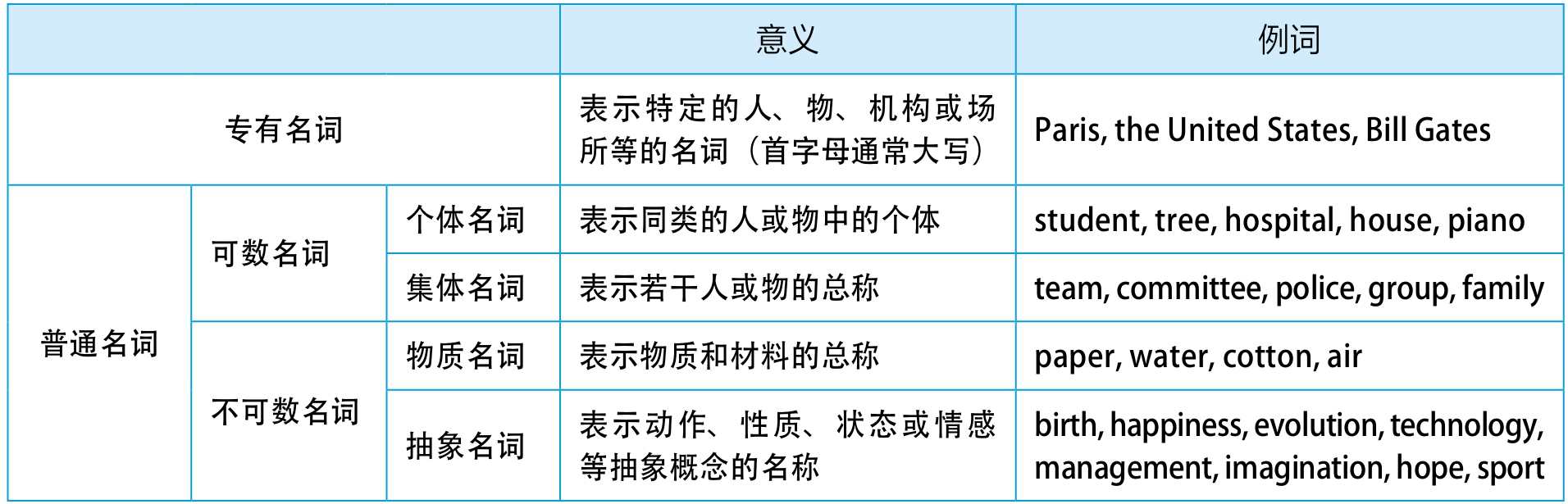
一、专有名词
我们先来简单列举一下专有名词。专有名词主要包括:
1. 人名及头衔
比如:Winston Churchill, the Queen of England, the President of the United States, Doctor Mathews, Professor Samuels等。
2. 著作名称
比如:
War and Peace(《战争与和平》)
The Merchant of Venice(《威尼斯商人》)
Pride and Prejudice(《傲慢与偏见》)
3. 月份
一年中12个月份的名称:January, February, March, April, May, June, July, August, September, October, November, December。
不知道读者意识到没有:中英文对月份的取名方式是不一样的。英语是采用专有名称来称谓每一个月,比如“1月”是January,“2月”是February,“3月”是March等等。而中文则是简单地用数字来标记“1月”“2月”“3月”等等。要注意,这些都是公历或太阳历,用英文说就是the solar calendar。另外,我们中国还用阴历或月历,用英文说就是the lunar calendar。因为上面这些月份的英语名称都指的是阳历,因此如果说到我们汉语中的阴历几月就不能用上面的月份名称了,而要用序数词来表达。比如“阴历二月”就不能说February,而是the second month on the lunar calendar或者简单地说成the second lunar month。比如我们中国的“情人节”是“七夕”,就是在“农历七月初七”。如果要告诉外国朋友,你就不能说the seventh of July*,而要说成the seventh of the seventh lunar month。我们的中秋节是在“农历八月十五日”,用英文说应该是the fifteenth of the eighth lunar month,而不是the fifteenth of August*。中国的春节是在“农历一月初一”,用英文说应该是the first of the first lunar month,而不能说the first of January*。因此,谈到中国的农历传统节日,我们都得采用类似的表达,而不能用上面的专有名称月份来表达。对此,读者不妨注意一下。
4. 星期
一周七天是:Sunday, Monday, Tuesday, Wednesday, Thursday, Friday, Saturday。
5. 节日
比如:Christmas, Easter, New Year's Day, Mother's Day, Thanksgiving Day等。
6. 地理名称
1)国家及大洲的名称
如:America, Africa, Europe, Asia, England, Scotland, China, Peru, Albania等。
2)地区、城市的名称
如:Rome, Vancouver, Beijing, Florence, California, Florida等。
3)江、河、湖泊的名称
如:the Atlantic, the Dead Sea, the Pacific, Lake Victoria, Lake Michigan, the Rhine, the Thames, the Nile等。
4)山脉、沙漠的名称
如:the Himalayas, the Alps, the Sahara等。
二、普通名词
从上面的表格中我们看到,对于普通名词,可根据“是否可以被分割”分为可数名词(countable noun)和不可数名词(uncountable noun)。对于名词,最重要的分类莫过于可数名词与不可数名词了。这一分类是学习英语名词用法的核心,因为它关系到很多问题,比如可数名词变复数的问题(见1. 3小节),限定词修饰名词的问题(见第三章),以及名词用作可数与用作不可数在意义上有差别(见1. 2小节)。
三、简单名词和复合名词
此外,根据名词的构成,我们可将名词分为简单名词和复合名词。简单名词就是组成部分不可被分割的名词,比如story, student和teacher等。英语中的名词绝大多数是简单名词。复合名词就是由若干单词组合而构成的名词,比如girlfriend, roommate和 mother-in-law(岳母/婆婆)等。