动词不定式
1 为何用带 to 不定式泛指动词?
1 为何用带 to 不定式泛指动词?
有一读者问:下面两句中为什么用 to put 和 to be而不用 put 和 be?
(1)touch vt. to put the hand, finger, or other part of the body on,...(摘自一英文词典)
(2)“Am”, “was”, and “are” are finite forms of the verb “to be”,but “being” and “been” are non-finite.(摘自一语法书)
上述 to put 与 to be 之所以用to,主要说明两点:一、借用此不定式形式表示 to 后的动词形式是动词原形,不是其他动词形式如分词、动名词等。例如 put 之前如不带 to,它也可能是现在式、过去式或过去分词,不一定是动词原形。二、动词前如没有 to,它也可能是别的词类。例如 live 之前如无 to,它就可能是形容词;再如 stand,其前如无 to,就可能是一名词。
2 一些有关动词不定式的问题
有不少读者问到一些有关动词不定式用法的问题。现在让我们一一讨论如下:
首先谈一个具有普遍性的问题,即:哪些及物动词可后接动词不定式? 哪些可后接动名词? 哪些既可后接动词不定式亦可后接动名词? 有没有规则可循?
没有什么规则可循。最好的办法是查阅较好的英语学习词典, 如《牛津现代英语高级学习词典》(Oxford Advanced Learner's Dictionary of Current English )和《朗文当代英语词典》(Longman Dictionary of Contemporary English )。这两部词典对其所收的动词都给以各种标号,对后面可接动词不定式的、可接动名词的,以及既可接动词不定式亦可接动名词的动词亦皆标号。国内出版的《当代英汉详解词典》也有所帮助。当然也应记忆一些常用的各种动词,如: 后接不定式的有afford, agree , aim, ask, claim, choose, decide, decline, demand, desire, determine, endeavour, expect, fail, hope, learn, manage, offer, plan, pretend, promise, refuse, resolve, threaten, wish等;后接动名词的有acknowledge, admit, advocate, avoid, consider, contemplate, defer, delay, deny, dislike, enjoy, escape, evade, fancy, finish, grudge, imagine, include, keep, mind, miss, postpone, practise, recall, recollect, repent, resent, resist, risk, stop, suggest等;后可接动词不定式也可接动名词的有attempt, begin, commence, continue, deserve, disdain, dread, endure, forget, hate, help, intend, like, love, mean, need, neglect, omit, prefer, propose, regret, remember, scorn, try, want等。
关于上面所列的动词,有两点需要说明:1. 对上述动词的分类乃是一般而论,并非没有例外。如enjoy与dislike一般后接动名词,但偶尔也有后接动词不定式的情况。2. 上面所列的动词都是及物动词,不及物动词如long, hesitate等则皆未列入。基于同样的理由,我们只列入后接动名词的及物动词stop。这个动词亦可后接动词不定式,但其动词性质已变,已不是及物动词而是不及物动词了。
第二个问题是选择填空:
(1)I forgot all about_________her.
A.telephoning B.to telephone
C.to telephone to D.the telephoning
应填A,全句的意思相当于:
(2)I forgot telephoning her.
但一般说来,过去式forgot后很少直接后接动名词。
有一读者还问到在一定的上下文中,例(1)会不会等于:
(3)I forgot to telephone her.
答案是否定的。不管什么上下文,例(1)都不会等于例(3),因为例(1)的动名词有动作已完成的含义,而例(3)中的动词不定式则表将去完成的动作。
第三个问题:
(4)She does not feel like_________anything right now. (eat)
为什么在这一句中只能填eating而不能填to eat呢?
提此问题的读者想是误将介词like看成及物动词了。应记住like在feel like doing something这一说法中是介词,所以后面必须用动名词eating。
第四个问题: 下面两句中的动名词与动词不定式有什么区别?
(5)Your shoes need cleaning.
(6)Your shoes need to be cleaned.
这两句的意思无甚区别,但例(5)似乎更为常见。
第五个问题:
(7)The house is to let.
(8)The house is to be let.
这两个句子有什么区别?
现在多用例(8)。主动式to let常用在广告中,如“House to let.”。在意义上to let与to be let无甚区别。
第六个问题:
(9)The grass was let grow.
这一句中过去分词let之后为什么不带to?
在这种句子结构中,谓语动词被动式后的动词不定式一般皆须带to,但被动式be let则属例外(在当代英语里这种例外是很少的)。常见的搭配有be let go, be let slip, be let fall等。在其他情况下,最好多用allow,如:
(10)He was allowed to do it.
第七个问题: but后接动词不定式时何时有to, 何时没有to?
关于这个问题,大致可分三种情况。第一种情况是but之后的动词不定式一般不带to,如:
(11)He did nothing but complain. (连词but后省去了that he did)
(12)Under such circumstances he could not but fail. (but之前省去了do anything)
(13)I cannot help but be sorry. (but后省去to是受了例[11]结构的影响所致)
(14)He could not choose but love her. (也是受了例[11]的结构的影响,这种说法现在已不多见)
第二种情况是but之后的动词不定式一般须带to,如:
(15)I have no choice but to accept the fact. (but后省去了the choice)
(16)There was no choice but to bear it and grin. (理由同上)
第三种情况是but后的动词不定式可带to亦可不带to,如:
(17)There is nothing to do but (to)fight it out. (部分地受到了例[11]结构的影响)
(18)There was clearly nothing left to do but (to)flop down on the shabby little couch and weep. (理由同上)
(19)There remained nothing but (to)get into the water...(理由同上)
最后一个问题:
(20)Why leave the door open?
有一位读者认为其中的leave不是不带to的动词不定式,而只是由:
(21)Why do/did you leave the door open?
这一完整句子简化而来的。
例(20)确实是一省略结构,但不是从例(21)简化而来,而是来自:
(22)Why should you leave the door open?
而在例(22)中,leave正是不带to的不定式(虽然为方便起见也常被叫做动词原形)。在较古的英语中,例(20)结构的不定式是常带to的。直到今天,仍有“What to do?”、“Where to go?”这样的疑问结构。在外语教学与研究出版社出版的《英语用法指南》(英人Michael Swan原著)第334页上,也有明确的说明:why+动词不定式(不带to)可用来引导疑问句。由此可见,例(20)中的leave确确实实是一个不带to的动词不定式,从而也证明了“why之后不可接动词不定式”这种笼统的提法是不妥当的。
关于动词不定式的一些问题,暂时就讨论到这里。
3 再谈一些有关不定式的问题
还有一些动词不定式的问题,现简要答复如下:
问一:
(1)I'm sorry I forgot to turn it off before I left .
请问此句中的不定式to turn用得对吗? 按语法,forget to do只能表未来的动作,forget doing 才能表过去的动作。例(1)中用forgot to turn表过去岂不是错了?
用过去式forgot时,其后的不定式仍表未来的动作,但这里的未来是过去式forgot的未来。其实,动词forget以及remember后接的不定式乃是表未完成的动作 ,其后接的动名词乃是表已完成的动作。只要把握住这一点,就不会在时间关系上产生误解了 。
问二: 请问动词不定式有哪些情态意义?
动词不定式用作表语和定语时往往有情态意义。现让我们分别举例说明一些常见的情况:
1. 用作表语:
(2)The doctor says that the patient is not to be moved. (not to be moved意谓“不可移动”)
(3)The letter is to be handed to him in person. (to be handed意谓“必须交与”)
(4)What am I to do if I fail the exams? (to do有“应该”的含义)
(5)He's to blame. (to blame意谓“应该受到责备”)
(6)Nobody is to know. (全句意谓“不应让任何人知道”)
(7)It's nowhere to be found. (全句意谓“哪儿也找不到它”)
(8)How am I to know? (全句意谓“我怎么会知道呢?”)
2. 用作定语:
(9)She is not the kind of girl to do such things. (to do有“可能”的含义)
(10)There are always some people to believe this nonsense. (to believe意谓“会相信”)
(11)There is nothing to fear. (全句意谓“没有什么可怕的”)
(12)He is not a man to know. (to know有“值得”的含义)
(13)Nothing to speak of. (全句的意思是: 不值得提)
(14)It isn't a thing to talk about — it is only a thing to feel. (to talk about 与to feel都有“应该”的含义)
(15)You have your children to consider. (to consider有“必须”的含义)
问三:
(16)She was seen to enter the hall.
有的书上把此句中的不定式to enter叫做表语,为什么?
英语语法术语,由于各家体系不同,看法不同,的确很不一致。国外如此,国内亦如此。有的语法家所用的表语,并不限于连系动词后的词语,也包括我们常用的主语补足语和宾语补足语等。这样,例(16)中的to enter也便成了表语。但在我国的英语教学中,to enter似乎一般不叫做表语,而是叫做主语补足语。
问四: 请问如何分析下面一句中的后一部分?
(17)We divided the work, he to clean the windows and I to sweep the floor.
句中的后一部分,亦即he to clean the windows和I to sweep the floor,和“(with)+名(代)词主格+分词”结构一样,也是一种独立结构。这种独立结构在此用作伴随状语。它在英语里并不罕见,再如:
(18)Greatly inspired by his words we felt that there was no difficulty we could not overcome with Vice-Chairman Zhou to lead us. (独立结构with Vice-Chairman Zhou to lead us在此用作条件状语)
(19)He proposed to Bland that they should start one or two picture theatres in the provinces, Bland to find the money and Wicks to provide the technical knowledge. (独立结构Bland to find...knowledge皆用作伴随状语)
(20)He would take us down on Thursday week for two months, all our expenses to be paid. (独立结构all our expenses to be paid用作伴随状语)
(21)A number of officials followed him, some to hold his robes, others to adjust his girdle, and so on. (独立结构some to hold... and so on在此亦用作伴随状语)
请注意上述独立结构中的不定式常表未来的动作,这是与独立结构中的分词不同之处。
问五: 请问在哪些情况下用不带to的不定式?
这是一个很大的题目,这里我们只能举一些常见的例句来说明:
(22)I saw him come. (see, hear, watch, let, make, have等动词的复合宾语之逻辑谓语动词之前不带to)
(23)She does nothing but cry. (连词but之后省去了she does)
(24)Why don't you go see the doctor? (口语中see之前可不带to,这种不带to的不定式多用于动词原形go与come之后)
(25)Try knock at the back door if nobody hears you at the front door. (口语中knock之前可不带to。又,祈使句中的动词原形try前自然亦不带to)
(26)“All I did was hit him on the head,” said the boy. (当主语部分含有实义动词 do时,用作表语的不定式可不带to)
(27)I'm puzzled what to think or say. (think之前已有to,故say之前可省去to)
(28)You ought to weep instead of laugh. (此处laugh之前常省去to)
(29)Why talk so much about it? (talk不带to)
(30)What do you want us to do? Put the clock back? (put不带to)
(31)For shame, Tony. You a man, and behave so. (behave不带to,并有贬意)
(32)I would rather go than stay. (动词stay前面省去I would)
(33)Try again and you will succeed. (try有假设的含义,不可带to)
(34)Will you please help me translate this poem? (translate前带to不带to皆可)
以上诸例,大都指狭义的不带to的不定式(即一般所谓的非谓语动词不定式)而言。至于广义的不带to的不定式(即一般所谓的动词原形),我们就不多说了。
问六: 请问如何分析下列句中的动词不定式?
(35)She trembled to think of it.
(36)Don't trouble to meet at the station.
(37)I was pained to hear it.
(38)It's kind of you to say so.
例(35)中的to think of it相当于when she thought of it,故为时间状语。例(36)中的to meet相当于about meeting,故是方面状语。例(37)中的to hear可以说是原因状语,也可以说是时间状语。例(38)中的复合结构of you to say so是全句的真实主语,it是形式主语。
问七: 带to的不定式在什么情况下可省去动词原形? 为什么在:
(39)Do as you are told.
(40)Don't go till I tell you to.
这两句中,第一句told之后不用to,而第二句tell you之后却用to?
一般地讲,只有在前面已经出现过同样的动词的情况下,为了避免重复,才可省去动词原形而只留下不定式符号to,如:
(41)He may go if he wishes to . (to后省去前已出现的动词go)
(42)I'd like to come but I don't know whether I shall be able to . (to后省去了前面已出现过的come)
(43)He always speaks faster than he needs to . (to后省去了前面已出现过的speak)
有时则是为了避免重复后面出现的动词,如:
(44)These who wanted to were able to look upon him. (为了避免重复后面的look upon him)
在所问的两个句子中,例(40)中的to之后显然省去了前面已出现的go。而例(39)中的as you are told之后所以没有to,则是习惯使然。as引导的从句省去to的情况还有:
(45)You ought to do as he tells you.
(46)Do as you see fit.
(47)— May I smoke?
— Just as you wish.
(48)Come and stay as long as you like.
在其他连词如what, when引导的从句中也有省去to的情况,如:
(49)Come when you want.
(50)I've decided to do what I like.
在某些动词如try之后也可省去to,如:
(51)— Can you start the car?
— OK, I'll try.
关于不定式问题,就谈这么多吧。
4 不定式用作目的状语抑或定语?
有一读者问高中英语课本中的这样两个句子:
(1)In some places little is done to make the smoke clean before it goes into the air.
(2)In many countries, laws have been passed to prevent factories from sending out poisonous gases and polluted water.
教学参考书上把这两个句子中的不定式看做是修饰动词的目的状语,但有的学生把它们看做定语。如果把这个句子变成主动语态,说不定式作定语用似乎也有些道理。请释疑。
第一句中的不定式似乎不能用作定语修饰否定词little,如将little换作否定词nothing, 即可看得更为清楚。第二句中的不定式,孤立地看,好像是一种两可状况,但从上下文来看,似乎将to prevent作为“以防止……”解较为妥当,故应是目的状语。
5 为什么正确答案是asked...to answer?
有一读者问这样一道多项选择题:
The question_________by the teacher is difficult _____.
A. asked...to answer B. to be asked...to be answered
C. asked...to be answered D. asking...answering
我觉得应选C,但正确答案是A,请问为什么?
全句的意思是: 教师提的问题难于回答。如是这样,即应选择A。A用asked,意即教师已经提出了问题。difficult之后应用主动式to answer,因为可认为to answer之前省去了它的逻辑主语(可能是me或us)。一般地说,difficult之后习惯上很少跟被动不定式。
6 it very easy to do it 也不错
有一读者问: 请问如何选择填空?
(1)— Was the test difficult?
— Not at all, We found _____
A.it very easy for doing. B.very easy to do it.
C.it very easy to do. D.it very easy to do it.
命题人也许认为只有C是对的,其实D也不能算错。让我们举一个其结构与D完全相同的例子吧:
(2)This pattern needs special practice as Chinese students may find it difficult to get used to it. (第一个 it 是形式宾语)
当然,比较起来,C较D可取,因为它较简洁。更简洁的说法是“We found it very easy.”。命题人自然不会将它列入,否则考生会更难于选择。
最后,也许有必要把C和D中出现的三个 it 再分别说明一下:
1. C中的 it 是代词,代表问句中的 the test。
2. D中的第一个 it 是引词,是形式宾语,真实宾语是 to do it。
3. D中的第二个 it 也是代表问句中 the test 的代词。
7 please可后接不定式
有读者问一道选择题:
(1)—How do you like my new car?
— I like it, but would you please_________park it on the road?
A. not to B. not C. don't D. won't
答案是A,为什么不选B?
这里可选A,亦可选B。一般说来,please后接带to的不定式的用法已经有点过时,显得比较古旧。
在20世纪20年代出版的《袖珍牛津词典》(Pocket Oxford Dictionary )里还有如下的例证:
(2)Please to ring the bell.
(3)Please not to forget.
但时至今日,这种结构并未完全消失(尤其在英国英语中),上述句(2)即是一例。再如:
(4)What I did was very bad. Please to forgive me, Shane.
(5)“Please to shut up!”cried Syd Parks.
(6)You will please not to disturb him.
但请注意,please to与please虽然皆可作“请”解,而其语法功能并不相同,试比较:
(7)Will you please to come in?(please在此是谓语动词,位置比较固定,其后须接一位语法大师所谓的infinitive of specification,即特定的不定式)
(8)Will you please come in?(以前人们常将这里的please视为虚拟式,当今则多被看做副词或感叹词,其位置较为灵活)
8 关于“think+不定式”结构
有一读者问:有人说动词think后通常不用不定式,只有在被动式中始可与不定式连用,如:
(1)This material is thought to be the best one in this area.
而think 之后一般应接“of+动名词”,如:
(2)For a moment I thought of playing truant.
但我在美国一部畅销小说中却见过这样的句子:
(3)I didn't think to ask.
不知你的看法如何?
的确有不少人认为最好不用think to的主动式;有些英语词典(包括一些著名的英语词典)甚至不将think to纳入;有的专家(我本人就曾遇见过)还认为think to是错误的。我们认为,你所引述的那位人士以及上述一些人的看法也许可以接受,但对广大的已有一定英语水平的人来说,就不很妥当了。
一般说来,think to有两层意思:一是相当于intend, expect, propose等;一是相当于remember。 先让我们探讨think to的第一种含义。这种含义都与意志或意愿有关,有不少人认为它是古体,当今已很少用,并且多用于否定和疑问结构中,如:
(4)I did not think to meet you here. (think=expect)
(5)I never thought to see you again. (thought=expected)
(6)I little thought to find you here! (thought=expected)
(7)Don't think to plead illness as an excuse with me. (think=plan, propose)
(8)Who would have thought to find me here? (thought=expectcd)
(9)Do you think to bring it me? (think=intend, propose)
但实际上think to用于肯定的陈述句中的情况也不少,实例如:
(10)I think to go to the dentist. (think=intend, propose)
(11)He thought to deceive me. (thought=intended)
(12)They think to escape punishment. (think=intend, plan)
(13)They think to influence the voters. (think=intend)
(14)You think to outwit me yet again. (think=intend)
thought to往往可表示“本想”,实例如:
(15)I thought to arrive early but couldn't.
(16)I thought to find him home. 我本想他会在家的。
然而,据已出版的Webster's Dictionary of English Usage 说,think to (=expect,intend to)在当今英语中仍很有用,并举了四个例证,兹摘录一二如下:
(17)...and I thought to succeed as they did, and as rapidly.
(18)Martin thinks to make a case for Whitman as a model.
我们在美国出版的畅销书中也见到过这样的例证:
(19)There is a latent barbarism here that I would never have thought to find in twentieth century.
现在谈谈think to相当于remember的情况。尽管有一些语法家责难这种用法,但在美国口语中它已被认为是标准英语了,实例不少,上述句(3)即是一例,现再举几例如下:
(20)I didn't think to lock the door.
(21)I did not think to tell the detective about the footprints.
(22)Did you think to ask him how his father is?
(23)I never thought to look in the dictionary.
(24)I wish I had thought to get you a tea gown.
(25)Why had she not thought to suggest the removal of her desk to the far end of the room?
最后应指出,有时think to相当于think of,但这是较为文雅的说法,实例(摘自荷兰著名语法家克鲁辛加著的《现代英语手册》)如:
(26)A quickened imagination so deceived me that I thought to hear the sea rolling. (thought to hear = thought of hearing)
9 不定式在此指什么时间?
有一读者问: 动词不定式用作定语时常指将来的动作,如:
(1)I have a lot of work to do.
动词不定式在此自表将来。但我遇到这样一句:
(2)She had too much to drink.
这里的had too much to drink似乎是“酒喝多了”的意思,请问如何解释这里的to drink所表的时间呢?
是的,动词不定式的一般式(非完成式)不论用作定语或别的什么句子成分,确是常指将来。但指其他时间的用法也不罕见。就拿用作定语的不定式来说,下面常见的:
(3)Hey! Have you got something to eat ?
这一句中用作定语的不定式to eat就不能说是指将来。换言之,something决不可译作“将要吃东西”,而应译作“食物”或“吃的东西”。
例(2)是一句常见的话,它的意思确是“她酒喝得太多了”。对too much to drink也应像理解例(3)中的something to eat一样,将它译作“太多的酒”,不要将它译作“将要喝的酒”,否则全句的意思岂不变为“她有太多的酒要喝”了吗? 如前所述,这种不表将来时间的动词不定式并不罕见。下面再举一些比较常见的用作定语的不定式,供参考:
(4)She was a brick to take it that way. (to take表已发生的动作;brick在此意谓“心肠好的人”)
(5)He has a right to decide . (to decide表经常发生的动作)
(6)She is not the kind of girl to do such a thing. (to do=who might)
(7)Clive was not a man to do anything by halves. (to do=who did)
(8)“I have learned a lot from Dutch soccer,” said Xie Yuxin, the first Chinese player to sign with a foreign club. (to sign=who has signed)
(9)Brazil finished the first round as the only team in the competition not to concede a goal. (not to concede a goal意谓“未曾输一球”,表过去的过去)
(10)The English based Dane is confident he can succeed the retired Han Jian and capture the only major title to elude him.(to elude him意谓“总是使他无法赢得的”,不定式表过去经常)
10 to wash在此是反射不定式
有一读者问这样一句话:
(1)She asked me if I had any clothes to wash.
这里为什么用主动不定式to wash?
这里之所以用主动不定式是因为to wash与其前的clothes在逻辑上是动宾关系。这种用作定语的不定式都是及物动词,而及物动词的宾语却置于它的前面,所以语法上将它唤作反射不定式。反射不定式皆属主动式,否则其前的宾语就无法解释了。再如:
(2)There is nothing to fear.
(3)I have my children to consider.
(4)It isn't a thing to talk about — it is a thing to feel.
11 这里不定式之后为何用on?
有一读者问: 为何下面句子末尾用on?
(1)I want some paper to write on.
要解决这个问题,首先需要举一个不定式之后不用介词的例子:
(2)I have a paper to write . 我有一篇学期论文要写。
不定式to write之后没有介词,因为我们可以说to write a paper。(注意to write和a paper在逻辑上具有一种动宾关系)而上述句(1)用的是write on,不是write,因为我们必须说to write on some paper,不可说to write some paper。这种用作定语的“不定式+介词”结构不乏其例,再如:
(3)I need a pen to write with .
(4)She has nobody to speak to .
(5)I have nothing to worry about .
12 为何这里sure不可后接主动不定式?
有一读者问这样一道题:
(1)— Is my wish to become a scientist possible _____?
— Yes, your wish is sure _____.
A. to realize, to realize
B. to be realized, to be realized
C. to realize, to be realized
D. to be realized, to realize
所给答案是C,但为什么不是A呢? 有一本书上说,不定式放在一些形容词后面,作状语,用来修饰形容词或整个句子,这类形容词比较常见的有easy, able, hard, glad, sure等。例如:
(2)This problem is not easy to solve.
(3)The test is difficult to understand.
上述选择题中的possible和sure都是形容词,为什么其后不可接主动不定式to realize呢?
所给答案是对的。看来你对be possible后接主动不定式to realize没有疑问,因为possible和easy, hard, difficult属于同一类形容词,其后皆可后接主动不定式。这种主动不定式在语法上叫做反射不定式,因为它与句子的主语在逻辑上是动宾关系(请注意可后接反射不定式的形容词possible之前须是名词)。但你所举的able, glad, sure等形容词则与easy, hard等不属于同一类。它们之后的不定式不是反射不定式。be glad之后的主动不定式常用作原因状语,用以修饰glad(也有人认为不定式是glad的宾语),如:
(4)I am glad to see you.
be able to和be sure to在当今语法界则常被视为半情态动词。这样的半情态动词还有be bound to, be likely等。be sure to的意思是“一定,肯定”(说话人的主观看法),其后可接do,亦可接be done,实例如:
(5)She is sure to succeed.
(6)He is sure to be found out.
从上下文看,上述试题中的sure之后自然应用to be realized。
13 no house to live并不错
有一读者问: 在《朗文英语词典》(Longman Dictionary of American English )中有这样一句话:
(1)I have no house to live.
我认为它是错的,live之后应有介词in,不知对否?
这句话并不错,尤其在美国英语里,再如:
(2)I have no place to go. (go后可不用介词to)
(3)This is a bad night to walk about. (walk about后不用介词in)
14 如何分析except to note?
有一读者问这样一句话:
(1)We will not discuss private legal systems, except to note that they are actively studied by people interested in the sociology of law.
这里的except是否是介词? “to note that...” 这个不定式短语是不是except的宾语?
首先应该指出,“except+不定式”是一比较常见的结构。它常与否定结构连用,可带to或不带to,上述句(1)中的except to note即是一例,再如:
(2)It had no effect except to make him angry.
(3)The government has few options except to keep interest rates high.
谓语动词如是do, except后的不定式则常不带to,如:
(4)We can do nothing except wait.
(5)She did nothing except weep.
上述结构除常与否定结构连用外,也可与everything, anything等不定代词连用,如:
(6)He does everything in the house except put the children to bed.
(7)He will do anything except work hard.
关于“except+不定式”中的except的词性,正如“but+不定式”中的but的词性一样,语法家们的意见并不一致。多数人(尤其是传统语法家)似乎都认为它是个介词(但也有人认为是个连词)。有的语法家则认为很难定夺,说它是介词或连词都可以。其实,对英语学习者来说,重要的是如何使用上述结构,而不是except的词性,不是吗?
15 不定式完成式能这样用吗?
有一读者问: 动词不定式的完成式可用作宾语补足语吗?
可以,比如“We believe it to have been a mistake.” 与“They knew the man to have been a soldier.” 两句中的 to have been。
16 这里应用不定式完成式
有一读者问如何做这道题:
(1)Charles Babbage is generally considered_________the first computer.
A. to have invented B. inventing
C. to invent D. having invented
应选A,即to have invented。“主语+动词的被动式(即be+过去分词)+to do”在英语里是一种颇为有用的句型,如:
(2)He is generally considered to have the finest tenor voice in the county.
据美国一位语言学者说,“主语+动词的被动式+to have done”结构则尤为普通。这一道题就是一例。
除动词consider(认为)的被动式外,say, believe等的被动式也常用于这种句型,如:
(3)He is said to have broken the window.
(4)John is believed to have gone.
那么,其他三种选择错在哪里呢?
选B (inventing)的同学可能认为主动式consider(考虑)后常可接动名词,如:
(5)I consider leaving early.
(6)We are considering going.
因而误以为is considered(被认为)之后也可接动名词。这里之所以不可用inventing,其理由就是上述句型不允许。从语法来讲,这里倒可用to be inventing,意谓“正在发明”,但与这道题的含义不合,故也不能用。
C (to invent)也不能用,因为它没有此题所需的动作完成的含义,正如不可将上述例(3)中的to have broken改为break一样。
D (having invented)虽有动作已完成的含义,但其前应有as才较为妥当。
17 必须选 to have been
有一读者问这样一道选择题:
(1)The old man is said_________very rich when he was young.
A.to have been B.having been
C.to be D.to have being
答案是A,C是否是错的呢?
这里必须选 to have been,以表过去,全句即等于:
(2)It is said that the old man was very rich when he was young.
如用 to be,意指现在,显然与句意不合。
18 remember可后接不定式完成式
有一读者问一道选择题:
(1)I remember_________the door before I went to bed.
A. lock B. to lock
C. to have locked D. being locking
答案为A,我觉得应选C。您的意见呢?
同意你的意见,应选C。再如:
(2)I remember to have seen the film.
19 如何用不定式进行式?
有一读者问: 在什么情况下可用“to be+现在分词”?可以说 “He was seen to be playing outside the house.”吗?
“to be+现在分词”是不定式的进行式,它的功能与限定动词的进行时态基本相似,所以许多英语语法著作都语焉不详,一掠而过。它的用法与不定式也大体相同。现分几类举例如下:
1. 不定式进行式可置于某些动词之后,用作宾语,如:
(1)I will not interrupt you any longer. You want to be reading .
(2)Do you wish to be again wandering and inquiring ?
(3)We did not expect to be staying in first-class hotels, because this is an economy tour.
(4)I'll need to be rising now.
(5)We resolved to be going the next day.
(6)I'd like to be dining at home now.
(7)He talks only because he loves to be talking .
(8)He longed to be going up the beach.
亦可用作真实宾语,形式宾语是 it,如:
(9)I think it rather unnecessary in you to be advising me.
2. 不定式进行式可置于“某些动词+名(代)词”之后,用作宾语补足语,如:
(10)While we supposed the old man to be reading the Bible to his wife, the pair of hoary reprobates have whisked up the chimney.
(11)If you don't think it too little, take that to be going on with. (it指一小笔钱)
3. 不定式进行式置于某些动词的被动式之后,用作主语补足语。这种动词有say, report, believe, think, find, know, understand, suppose等。但请注意不定式进行式不可用在 see, hear 等感知动词的被动式之后,故不可说“He was seen to be playing outside the house.”,而须把 to be 去掉。实例如:
(12)He was said often to be staying up late.
(13)Egypt and Israel are reported to be making preparations for the September summit in Washington.
(14)He is believed to be coming .
(15)Come, I am supposed to be calling you to lunch.
4. 不定式进行式可置于某些不及物动词之后,用作状语,如:
(16)She flushed to the roots of her hair to be explaining that to him and he smiled apologetically.
(17)I thought they were talking too much to be doing their work properly.
5. 不定式进行式可用于 have, have got, be going, seem, happen等动词之后(在这种结构中,be to, have to, be going to, seem to, happen to 等实际上已成为情态动词)。实例如:
(18)Doing one thing always reminded him that presently he would have to be doing another.
(19)You've got to be kidding .
(20)I'm going to be asking a lot of questions at the meeting this afternoon.
(21)He seemed always to be either washing his hands or wiping his boots.
(22)When he came in, I happened to be lying on the bed, reading.
6. 不定式进行式也常置于某些形容词之后,用作状语,如:
(23)He was returned very eager to be improving his own place.
(24)His fingers were ever straying as if impatient to be playing upon his pipe.
(25)He lay down with his eyes closed, glad to be absorbing the sun.
(26)You are much too young to be meeting young men.
(27)I am not likely to be seeing her.
(28)She is anxious to be going abroad.
有时也可置于“形容词+for+名(代)词”之后,与 for 短语构成复合结构(用作状语),如:
(29)It is rather late in the day for you to be taking precautions.
7. 不定式进行式可置于副词 enough 之后,用作状语,如:
(30)He was driving fast enough to be going for a doctor.
8. 不定式进行式可置于名词之后,用作定语,如:
(31)It's time to be going home, your mother will be anxious.
(32)You've no need to be fearing .
(33)He has no right to be offering presents to any men.
9. 不定式进行式也可用作主语,如:
(34)Just to be doing something again was a help.
也可以用作真实宾语(形式主语是it),如:
(35)It's nice to be sitting here with you.
(36)It was pleasant to be reading and resting for change.
最后,请注意下列几点:
1. 不定式进行式在英语中用得较少(我们在此仅指“to be+现在分词”,不包括“情态动词+be+现在分词”)。
2. 不定式进行式常用以表将来,强调时间因素,往往表“即将”,试比较:
(37)He is believed to be coming.(即将来)
(38)He is believed to come. (to come 只表“会来”,不强调具体时间)
3. 不定式进行式和一般进行时态一样,常表一种持续性动作,也可以说是表一种状态。有一位外国学者对下面一句话中的 to be looking down 和一般不定式进行时做了比较:
(39)The soup was bad, and Miss Vereker left most of hers and contrived to be looking down at it very curiously every time Mrs. Dersingham glanced across the table at her.
他说这里的 to be looking down 的意思是“一直不停地往下看着(那汤)”。如用 to look down, 则表一种单纯的动作,其含义就变为:每当 Mrs.Dersingham 瞟 Miss Vereker 一眼,Miss Vereker 就往下看一看。
4. 和一般现在分词相比,不定式进行式强调事实,而现在分词则强调描绘性,试比较:
(40)He was found to be sleeping.(强调“在睡觉”)
(41)He was found sleeping. (强调“在睡着”)
20 这里可说 to be being translated 吗?
有一读者问: 我们可以说:
(1)It is said that his novel is being translated into English.
但是否也可以说:
(2)His novel is said to be being translated into English.
关于不定式进行式的被动语态的问题,据一位美国学者说,是可以用的,他举的例证是 to be being seen 。但有一位英国学者则说,这种被动语态虽可能被使用,但通常却都不这么说,他举了一个反面例证:* I'd like to be being massaged right now.(﹡即意谓“不可使用”)据此,我们认为还是用句(1)的好,句(2)起码令人觉得有点别扭,虽然从纯语法观点来看并没有错。
21 关于动词不定式被动式的用法
有些读者提出有关动词不定式被动式的用法问题。有人直截了当地问道:动词不定式何时用被动式?
这个问题比较复杂,涉及面也较广。限于篇幅,我们只能简要地谈一些常见情况。 不定式的被动式,和它的主动式一样,也可以用作主语、宾语、表语、定语、状语、宾语补足语和主语补足语等。现让我们分别举例说明如下:
1. 用作主语,如:
(1)To be attacked by the enemy is not a bad thing, but a good thing. (这里必须用被动式 to be attacked, 因为其未写出的逻辑主语是 attack 的受事者)
(2)It's a great honour to be invited to the banquet. (必须用被动式 to be invited, 因为其未写出的逻辑主语是 invite 的受事者)
2. 用作宾语,如:
(3)I wish to be excused . (这里必须用 to be excused, 因为I是excuse的受事者)
(4)It needs not to be said that they are very happy together. (这里也必须用被动式 to be said, 因为 that 从句是 say 的受事者)
3. 用作表语:动词不定式的主动式与被动式皆可用作表语。请看下面一些句子中的被动式,并请注意一些被动式所表的情态。
(5)The meeting is to be held tomorrow afternoon. (这里显然应用被动式)
(6)The form is to be filled in ink.(有“必须”的含义)
(7)We are to be married soon.(表示安排)
(8)He is not to be drawn so easily. (意味着不可能)
(9)He is to be dealt with by the law. (表应该)
(10)It is not to be wondered at . (意味着不值得)
(11)Such things are to be seen any day. (习惯用法)
(12)Sure you know what is to be done .(与 what 连用)
4. 用作定语:动词不定式用作定语时,可以是主动式,也可以是被动式,情况比较复杂一些。何时常用被动式,请细看下列例句及说明:
(13)It leaves much to be desired . (句中只有受事者,故显然必须用被动式)
(14)It was a much-to-be-longed-for place. (理由同前)
(15)Scrooge was not a man to be frightened by echoes. (句中虽有主语 Scrooge,但它不可能是 frighten 的施事者,故仍须用被动式 to be frightened)
(16)This is a matter not to be taken lightly.(与 not 连用时常用被动式)
(17)This is a day never to be forgotten . (与 never 连用时常用被动式)
(18)Labour is still a factor to be reckoned with in American politics. (to be reckoned with 是习惯用法,需要牢记,其他还有 to be trifled with 等)
(19)There is no time to be lost . (亦可用主动式 to lose,意义上无甚区别。 口语多用主动式)
(20)There's a lot of work to be done . (着眼于受事者。如用主动式 to do 则着眼于执行者)
(21)There's nothing to be done . (意谓“无事可做了”,即没有办法了。如用主动式 to do 则意谓“无事可做”,有无聊之意)
(22)There was no sound to be heard . (习惯上须用被动式)
5. 用作状语:动词不定式用作状语时也可以是主动式或被动式,其所修饰的对象为动词、形容词、副词等。何时常用被动式,请看下面的例句和说明。
(23)I had to shout to be heard . (句中只有受事者,故显然须用不定式被动式 to be heard,修饰动词 shout)
(24)The handwriting is very difficult to be read . (这种结构中的形容词之后常用不定式主动式,因为人们往往认为形容词后省去了 for one 或 for people. 但如强调句中受事者,亦可用不定式被动式。例中被动式 to be read 修饰形容词 difficult)
(25)The infectious disease is likely to be wiped out in a few years.(像 likely 这样的形容词多后接不定式被动式,强调句中的受事者。例中被动式 to be wiped out 修饰形容词 likely)
(26)This box is too heavy to be lifted . (在这种结构中亦多用不定式主动式,但也有例外。例中被动式 to be lifted 修饰副词 too)
(27)Jack is not easily to be knocked off his feet.(在这种特殊结构中必须用不定式被动式)
(28)It is a calamity hard to be borne . (被动式 to be borne 与主动式 to bear 皆可用,其意义无区别)
(29)I am ready to be shaved . (可用被动式 to be shaved,亦可用主动式 to shave,但二者含义不同:前者意谓刮脸者是别人,后者意谓刮脸者是本人)
6. 用作宾语补足语,如:
(30)The captain ordered the flag to be hoisted . (不定式被动式 to be hoisted 在此用作宾语补足语,其受事者是宾语 flag)
(31)He did not like his intention to be laughed at . (不定式被动式 to be laughed at 在此用作宾语补足语,句中宾语 intention 是受事者)
7. 用作主语补足语,如:
(32)The flag was ordered to be hoisted . (不定式被动式 to be hoisted 是 主语补足语,主语 flag 是受事者)
(33)The wreckage was left to be cleared up by us. (由于有 by us 短语, 因而主语补足语用被动式的理由更加明显)
(34)That remains to be seen . (remains 在此是实义动词,故被动式 to be seen 是主语补足语)
8. 动词不定式的被动式,和主动式一样,也可以用作“for+名(代)词+动词不定式”这一复合结构中的逻辑谓语,如:
(35)We were waiting for the door to be opened . (被动式 to be opened 是 door 的逻辑谓语;句中只有受事者,无施事者,故用被动式)
(36)He was anxious for the performance to be repeated . (to be repeated 是 performance 的逻辑谓语,用被动式的理由同前)
从上述举例说明中,不难看出下面几点:
1.如句中没有受事者,不定式则可根据其被动意义用被动式;
2.如句中只有受事者,没有也不可能有施事者,不定式应用被动式;
3.如句中既有受事者,又有施事者(包括被省去的施事者在内),这时,如着眼于受事者 ,则可用不定式的被动式;
4.有些情况习惯上要用不定式被动式,需要牢记;
5.有时既可用主动式亦可用被动式。这时二者的意义有时有区别,有时没有什么区别。
关于动词不定式被动式的一般用法,就谈这么多吧。
22 作定语用的主动不定式与被动不定式之比较
有一读者问: 经常见到这样的句子:
(1)I have a lot of work to do.
请问to do与to be done有什么区别?
二者含义不同。to do指说话人本人要去做的工作,to be done则指说话人给予别人的任务。试比较:
(2)There is nothing to do. 没有事干。
There is nothing to be done. 没有办法。
(3)There is nothing to see. 没有值得看的。
There is nothing to be seen. 什么也看不见。
但有时二者无甚区别,如:
(4)There is no time to lose(to be lost).
23 关于用作定语的不定式被动式
有一读者问: 在某期《英语世界》中有这样一个句子:
(1)Chinese “White Water” is actually just boiled water, sans tea, coffee or anything else, never to be confused with the English “White Coffee”, which means coffee with milk or cream.
请解释一下never to be confused 这种不定式的用法。
never to be confused语法上唤作不定式被动式否定结构,在此用作定语,修饰其前的boiled water(实指Chinese “White Water”)。不定式否定结构用作定语时常用被动式,再如:
(2)This is a day never to be forgotten .
(3)This is a matter not to be taken lightly.
24 to be asked表一客观事实
有一读者问这样一句话:
(1)I feel it a great honour to be asked to speak at the meeting before so many students.
不定式表将来,可是这里的to be asked表什么时间呢? 说话人说此话时已站在讲台上,这个不定式还会表将来吗?
不定式确实可以表将来,如:
(2)I hope to come .
(3)I'd like to go swimming today.
(4)He is sure to get there in time.
如将上述三句改作间接引语,to come, to go和to get即变为表过去将来的不定式。但请注意不定式亦可表现在和过去。表现在如:
(5)It has nothing to do with me.
(6)There isn't a girl in London to beat her.
(7)She is not the kind of girl to encourage lovers.
不定式亦可表过去,如:
(8)It did him good to take long walks.
(9)He has been known to write a lot of detective stories.
(10)He was always the first to come and the last to leave the office.
不定式还常可表经常或客观事实或真理,无时间概念,如:
(11)To see is to believe .
(12)There are always plenty of people to believe this nonsense.
(13)The man to consult is Wilson.
上述句(1)中的to be asked显然表一客观事实。
25 主动不定式与被动不定式的区别
有一读者问下面两句有何区别:
(1)The basket is too heavy to carry.
(2)The basket is too heavy to be carried.
句(1)意味着 too heavy for me (或us等)to carry,强调执行者;句(2)则强调受事者 the basket。但我们一般多用主动不定式。
26 此处主动不定式与被动不定式之不同
有一读者问下面两句有何区别:
(1)I have something to do.
(2)I have something to be done.
上述句(1)强调 to do 的执行者,意即“我有点事要去做”,其含义可能是:我不能和你聊了。上述句(2)强调受事者 something,其含义可能是:这是我所规定要做的事,或别人给我规定要完成的任务。
27 这里多用主动不定式
有一读者问:我遇到这样一道改错题:
(1)The young  of bamboo
 crisp and
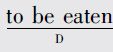 .
.
我认为D不对,应改为to eat,但说不出道理,请指点一下。
在上述句子结构中,一般多用不定式的主动式 to eat,因为人们往往倾向于认为像 tasty 这样的形容词之后省去了 for one(或 people,或 us,或 you)。再如:
(2)The question is difficult to answer .
(3)This dress was easy to make .
(4)This water is good to drink .
但如强调受事者,则可用不定式的被动式,如:
(5)The handwriting is very difficult to be read .(这里强调受事者handwriting)
28 如何分析这个不定式短语?
有一读者问这样一句话:
What is certain is that a seventh-century Christian church was burned down in 1807, to be succeeded by the Norman church of Old St.Paul's.
如何分析 to be succeeded?
这里的不定式短语 to be succeeded by the Norman church of Old St.Paul's 相当于 which was to be succeeded by the Norman church of Old St.Paul's,用作非限制性定语,修饰其前的 that 从句。
29 何谓不带 to 的动词不定式?
有一读者问:
《常人趣事》一书中有这样一句话:Will you two go back to work, please? 书中说这句话用的是“Will + you + 不带 to 的动词不定式”这种句型。这里的“不带 to 的动词不定式”是否就是动词呢?
不带 to 的动词不定式就是我们常说的动词原形,也就是你问的句子中的 go。我们知道,一个动词具有许多不同的形式,如动词go除go外,还有 goes, went, going, gone 等形式,它们都是动词形式,但只有 go 是动词原形,或叫做不带 to 的不定式。对于我们来说,“动词原形”这一叫法可能简便易学,但在一些语法家们看来,它却不够科学,不够精确,有与动词词干相混淆的危险,所以他们都主张用“不带 to 的不定式”。也有语法家对上述的 go 既不叫“动词原形”,也不叫“不带 to 的不定式”,而叫做“动词的简单形式”。
30 关于不带to不定式的两个问题
在这里,我们愿意试答一些读者提出的两个有关裸形不定式(bare infinitive,即不带to的不定式)的问题。
第一个问题是:小说《简·爱》(Jane Eyre )中有这样一个对话:
(1)— Alone. Jane?
— Yes. It is see or hear news of a friend about whom I have for some time been anxious.
请问see之前是否漏掉了to? 这个句子对吗?
这句话并没有错。其中see之前是省去了不定式符号to,而不是漏掉了to. 当然在see之前也可以加上to, 这样可显得正式一些。但在口语体中,则可用裸形不定式。同样的句型再如:
(2)Phalinger's rifle came up. It was live or die .
省去to的裸形不定式并不限于上述句型,还有许多可省去to的情况,再如:
(3)They not only want do the activity, they feel a basic need to look the part.
(4)There'll be no man say I tried and failed.
(5)If you'll be so good as give me your keys, my dear, I'll attend to all this sort of thing in future.
第二个问题是:
(6)What do you want me to do? Put the clock back?
如何解释这里的put呢?
如果上述句(1)—(5)中的裸形不定式是一种省去to的省略形式的话,那么,上述句(6)中的put就是一种并非省去to的裸形不定式。严格说来,它只是一种动词原形,因为它与不定式并没有多大关系。但是语法家们仍唤它作裸形不定式或简单不定式(simple infinitive)。这种裸形不定式可能源自祈使语气,也有人说它源自虚拟语气。但不管它来自哪一种语气,它在现代英语中,从结构或用法上看,已既不是祈使语气也不是虚拟语气了。它常充作谓语动词,可以用单个,也可以用多个。
让我们先探讨一下它的单个用法。这种用法似乎最为常见。它又可分为下列几类:
1. 用于疑问句:上述句(6)即属于此类,再如:
(7)What could she say? Deny the truth to her own child?
(8)It's a lie! A shameless lie! I smash pots and pans?
(9)How say you? 你意如何?
(10)Why not stay here a little longer?
2. 用于感叹句:
(11)Talk about snow! 好大的雪!
(12)Jeanny keep a secret! She'll have told a dozen people by now, or I'll eat my hat.
(13)A man not know what he had on! No, no!
3. 用于重复:
(14)— How you must have hated it!
— Hate it? I have never been so happy in my life.
(15)— I did not know he ever did call on her. He does not know her.
— Not know Miss Mitchell?
— I thought you were talking of Miss Robertson.
(16)— Nephew! Keep Christmas in your own way, and let me keep it in mine.
— Keep it! But you don't keep it.
4. 用于表让步等的从句:
(17)I couldn't resist my curiosity, my anxiety — call it what you will.
(18)Try as I please, I cannot join myself on with the doctor.
(19)Turn which way he would, there appeared to be no avoiding the blow.
然后让我们看一下这种裸形不定式的多个式用法。这种用法也不罕见,它又可分为连用两个和连用两个以上两种情况:
1. 连用两个裸形不定式,实例如:
(20)In the interim he had to find some means of keeping Laxalt devoted. Perhaps promise him a second term as governor, maybe just offer to put on the payroll. Or why not both?
(21)Gray light in the east now, and he began to experiment with his composition. Move tripod two feet left, readjust legs sticking in muddy ground by the stream.
2. 连用两个以上的裸形不定式,实例如:
(22)Fight , fail , fight again , fail again...till their victory; that is the logic of the people.
(23)Make trouble, fail , make trouble again, fail again...till their doom; that is the logic of the imperialists and all reactionaries the world over in dealing with the people's cause.
(24)He sat at the table again, smoking, taking a drink of beer now and then. She cooked, sipping on her beer between tasks. ...Vegetable oil, one and one-half cups of vegetables. Cook until light brown.
Add flour and mix well. Add water, a pint of it. Add remaining vegetables and seasonings. Cook slowly, about forty minutes.
由以上五例可以看出,这种连用非省略式的裸形不定式的用法的主要目的在于叙谈一种状况。这种状况可能是一种系统,也可能是一种规律。但一般不是一系列具体要做的动作或是正在进行的一系列动作。否则就须分别使用带to的不定式和动名词了。
31《英语语法手册》上为什么省去了to?
有一读者问:某期《英语学习》中的《help后动词不定式何时要用to?》一文谈到Frederick T. Wood博士认为:
(1)I helped her to mount her bicycle.
一句中的to不能省去。然而《英语语法手册》(修订本)上都有:
(2)Being criticized helped him see things more clearly.
(3)Party Secretary Wang helped Xiao Li see his error.
这种情况似乎与例(1)相同,因为“看事情”和“认识错误”别人都无法承担任务,只能起到从旁帮助的作用,同理不能省去to,而为什么却偏偏把to都省去了呢?
F.T.Wood先生的确认为“help+宾语”之后接带to的不定式和接不带to的不定式二者在含义上有所不同:后者意味着帮助者本人参与了行动,承担了一部分工作,从而减轻了被帮助者一部分负担;前者则相反,只能从旁帮助被帮助者达到其目的,而不能承担其一部分工作。这是F.T.Wood先生一向锐敏与精细之处。
然而,如果动词不定式表的是抽象动作,如例(2)与例(3)的see,而不是像例(1)的mount那样的具体动作的话,动词不定式的to则似乎是可用可不用的,如:
(4)Trade helps industry (to)develop.
例(4)这里显然不容易得出这样一种结论:因为贸易直接参与了工业的发展,故可以省去to。
在这种情况下,重要的倒是不带to的动词不定式在逻辑上必须与help的主语取得一致,否则似不宜省去to。例(4)的develop可以省去to,因为主语trade可以develop。例(3)中的see可以省去to,因为它与主语party Secretary Wang在逻辑上是说得通的。例(2)的主语形式上虽是动名词被动结构,表动作,但实际上是指动作的执行者,所以它和省去to的see在逻辑上也是一致的。
另外,省不省去to与文体亦有关系。在正式文体中多用to,而在非正式文体中,不带to的结构则较为常见。即使在美国英语里,带to的不定式亦较严谨。一位著名的美国语法家曾举例说明如下:
(5)I helped him do (or especially in careful language to do)it.
但在美国,人们一般似乎并不按照F.T.Wood先生的看法行事,如在一美国刊物中谈到家庭教育时,就有这样一句话:
(6)With young children in particular, parents can help children abide by limitations with a little preparation. (这里显然没有父母直接参与了被帮助者abide by的行动的含义)
“help(以及know, find等)加一个用作宾语的名(代)词”之后之所以可以跟带to或不带to的不定式,盖由历史演变而来。在远古英语里,动词不定式和名词一样也有各种格的形式。与格之前常有to,对格之前则不带to。现在的带to的不定式即来自与格,不带to的不定式即来自对格。两者在历史上并存了很久。如今虽然带to的不定式在许多方面占了上风,但不带to的不定式并未完全退出历史舞台,而在某些方面仍颇有生命力。
32 except与but后的不定式何时可省去to?
有一读者问: 有这样四个句子:
(1)He seldoms goes back home except to ask for money from his parents.
(2)He did nothing there except watch TV for the whole night.
(3)I had no choice but to stay in bed.
(4)Last night I did nothing but prepare my lessons.
我搞不懂except和but之后何时接to何时不接to。
but与except后的不定式是否省去to,大致有三种情况:
第一种情况:其前的谓语动词为do时,可不用to,如上述句(2)和(4)。(用to也不为错)
第二种情况:其前的谓语动词不是do,则一般须用to,如上述句(1)和(3)。
第三种情况:其前为there is nothing to do,则可用可不用to,如:
(5)There is nothing to do but (to)fight it out.
33“find+宾语”后的不定式是否带 to?
有一读者来信问这样一个句子:
(1)He found himself fall behind the others after he came back from Britain.
这里动词 find 之后的宾语补足语用了不带 to 的不定式,它是否亦可后接“宾语+带to的不定式”呢?像 find 一类的动词还有哪些?它们各自的用法如何?
这个问题提得很好,有一定的普遍性。所以我们愿意在里探讨一下。
这实际上是一个有关“动词+宾语+不定式”结构的问题。对多数动词来说,其后的宾语补足语一般皆用带 to 的不定式,如ask,get,want,cause, force, like,press, declare, tell, allow 等,实例如:
(2)We asked Kate to sing .
(3)You'll never get me to agree .
(4)Do you want me to stay ?
(5)The noise caused me to jump back.
但有少数动词一般须后接“宾语+不带 to 的不定式”。这种动词可分为两类:一类是感觉动词,常见的有 feel, hear, notice, observe, perceive, see, watch 等,实例如:
(6)I felt my heart beat violently.
(7)I heard somebody cry .
(8)Did you notice anyone come in?
(9)He pretended not to observe her do it.
(10)I saw him enter the room.
(11)I watched the sun rise .
值得注意的是,在高雅的英语中,亦有人用带 to 的不定式,只是较为少见而已,实例如:
(12)They were reminded of their personal sorrows; and perhaps felt themselves to share in a sorrow that was universal.
(13)I observed the noise and the flutter of wings to increase very fast.
(14)Vernole could perceive anon the door to open .
此时动词 see 后接“宾语+带 to 的不定式”的情况似乎稍多一些,如:
(15)He sees your best luck to come .
(16)I saw her corral lips to move .
尤其当 see 意指“认为,理解”时,如:
(17)I see this to be true.
(18)We may see them both to be cases of one uniform law of causation.
上述两句中皆出现了 to be。其实在其他情况下 to be (不省去 to)也常用作宾语补足语,再如:
(19)Soames noted his dress clothes to be well cut.
(20)Why had she not gone to her own room, as she had felt to be the safest.(as 在此是关系代词,用作 felt 的宾语)
另一类是使役动词,如let, make, have 等,实例如:
(21)Let me see .
(22)I made him go .
(23)Have him come early.
have 作“允许”与“经历”解时亦常后接“宾语+不带 to 的不定式”,实例如:
(24)I won't have you say such things.(have 作“允许”解)
(25)Sometimes on a morning I have a dozen people call on me.(have 作“经历”解)
这一类动词同样也有少数时候后接“宾语+带 to 的不定式”的情况,如:
(26)“Let the chairwoman alone to be the first!”cried she who had entered first.
(27)Mr. Rochester would have me to come in.
动词 make 后接“宾语+带 to 的不定式”的情况要稍多一些,如:
(28)Money can make a mare to go .
(29)He was uneasy with a sense of having made himself to appear stupid.
(30)Your master has to be stronger than you are —has to tell you you are a fool and make you to know it.
(31)He cannot be thus circumstanced without a shudder that makes the very marrow in his bones to quiver in him like a shaken jelly.(这里用 to quiver 可能是由于距离 makes 较远的缘故)
除上述两类常后接“宾语+不带 to 的不定式”的动词外,还有一类动词既可后接“宾语+不带 to 的不定式”,亦可后接“宾语+带 to 的不定式”。这种动词常见的有 help, know, find 等等。关于 help 和 know 已讨论过,这里就恕不赘述了。动词 find 亦可后接“宾语+不带 to 的不定式”或“宾语+带 to 的不定式”,但似乎多后接“宾语+不带 to 的不定式”,上述句(1)即是一例,再如:
(32)I found it pay .
(33)You'll find the lock go the better for a little oil.
(34)I find the King's English express my meaning better.
(35)She found the interest of the subject increase .
但其后接“宾语+带 to 的不定式”的情况也不罕见,实例如:
(36)I found this plan to tell through life.
(37)The next annoyance that we had was a very bad smell, which we found to proceed from the drains.
但其后如接的是“宾语+to be”,to be 中的 to 一般不可省去,如:
(38)I measured the tail of the dead rat, and found it to be two yards long.
(39)This ordinary fellow is so enchanting that those who meet and talk to him immediately find him to be a comforting fire, which warms everyone approaching it.
此外,动词 bid 和 leave (允许)亦可后接“宾语+不带 to 的不定式”或“宾语+带 to 的不定式”,实例如:
(40)He bade the servant call the boy into the room.
(41)He bade them (to)leave at once.
(42)Leave me go , will you?
(43)Leave him to do as he likes.
最后,应该指出,上述感觉动词、使役动词以及 help, know, find 等后接的用作宾语补足语的不带 to 的不定式一般多表动态(动作或事件);如表静态,则用带 to 的不定式,如上述句(17)、(18)、(19)、(20),或用其他句型,如:
(44)I saw that he was very pale.
关于这个问题就写到这里吧。
34 如何解释 go visit?
有一读者问这样一个句子:
(1)The first thing I would suggest is that you go visit the States and see things for yourself.
在此句中,go 和 visit 都是动词,为什么能连在一起用呢?
英语中的动词原形(注意一般必须是动词原形)如 go 和 come 等在口语里可后接不带 to 的不定式,再如:
(2)I'm all right. Go look after John.
(3)Come have a glass, and maybe that'll brave you up.
(4)Try knock at the back door if nobody hears at the front door.
35 go and get 与 go get
有一读者问: 下面两句有何区别?
(1)Go and get a doctor.
(2)Go get a doctor.
这两句话具有同样的意义,都属于口语体,只是句(2)多用在美国。
36 “动词+and+动词”结构不一定总是用动词原形
有一读者问: 《大学英语》某期上有一篇文章说,动词come, go, wait, try, stop等与另一动词连用时习惯上将两动词联结起来。构成“v.+and+v.”的结构。它不仅用于祈使句中, 还可用陈述句中, 但必须用原形动词。而《朗文当代英语词典》(Longman Dictionary of Contemporary English )则说“go and+v.”是可以用在各种时态中的。上述说法是否欠妥,请赐教。
上述说法一般说来是对的,因为这里的and相当于to。但“go and+v.”则似乎较为特殊。此外似乎还有stop等亦可用于一切时态。
37 “know+宾语”后的不定式不可改用现在分词
有一读者问这样一道选择题:
(1)The only person I have ever known_________a skeleton in the cupboard is George.
A.he had B.having C.that he has D.to have
答案是D,为什么不是B呢?
关于动词 know 常用在什么句型中,可查好的学习词典。具体到你所提的问题,如你查阅英国的《牛津现代高级英语学习词典》( Oxford Advanced Learner's Dictionary of Current English ),就会在词目 know 的第一义项中看到“only in the past and perfect tenses”(只用于过去式与完成式)这样的说明,然后给予两个例句如下:
(2)I've never known it (to)snow in July before.(to 可省去不用)
(3)He's sometimes been known to sit there all day.(这里不可省去 to)
由此可见,know 的过去式与完成式之后只可接宾语和不定式(to 在主动语态中可省去),不可接宾语和现在分词。因此,上述句(1)只可选用 to have,不可选用 having。
38 “know+宾语”后的不定式带不带 to?
有读者问这样一句话:
(1)“Well,” said St. John, laughing, a thing I had never known him do before.
请问动词 know 后的“宾语+不定式”结构中的不定式是否也可带 to?但何时又不带to?
英语里有两三个动词后的用作宾语补足语的不定式往往可带 to, 亦可不带 to。最常见的是动词 help,我们已较详细地讨论过。另一个较常见的动词就是 know。关于 know 后面用作宾语补足语的不定式,似乎不可笼统地说它可随意地带 to 或不带 to。
我们知道,动词 know 可意指“知道,认为”,亦可意指“经历,看到,听到”。在后接用作宾语补足语的不定式时,二者是有显著区别的。总的说来,前者(常用现在或过去一般时)之后的不定式应带 to,如:
(2)I know him to be ill.
(3)They knew the man to have been a spy.
应该指出,上述这种句型较正式、文气,所以有些英语学习词典未收纳。
具有“经历,看到,听到”意义的动词 know(多用完成式,有时亦用过去式)后的不定式则可带 to, 亦可不带 to。据一位语法大师说,不带 to 的情况要多于带 to 的情况,但这恐是指英国英语而言。有一位美国语法学家则说带 to 的情况较为晚近,乃是受到法语和拉丁语的影响所致,所以虽不能说是生硬或文气,但较为高雅,多用于严谨的文体中。现举一些实例如下。
关于不定式不带 to 的情况,上述例(1)即是一例,再如:
(4)I have never known him tell a lie.
(5)She had never known them fail .
(6)I have known strange things happen .
(7)He had known him often refuse to be concerned.
(8)I never knew her complain .
再看一些不定式带 to 的例证:
(9)I have never known her to tell lies.
(10)I have known them to strike their children in front of visitors.
(11)I had never known him to pass the garden-gate before.
(12)I never knew her to come on time.
(13)Did you ever know him to wear a black over his eye?
有些辞书还明确举出一些不定式可用亦可不用 to 的例证,如:
(14)I've never known it (to)snow in July before.
(15)I never knew him (to)do such a thing.
(16)I have known her (to)lie .
但须指出,如果动词 know 用于被动语态,则不论其意为“知道,认为”或是“经历,见到,听到”,其后的不定式皆须带 to,如:
(17)He is known to be a good man.
(18)He is known to have been a spy.
(19)Even small amounts of these substances are known to cause skin problems.
(20)She has never been known to lose her temper.
此外,下面一些情况亦一般皆须用带 to 的不定式:
(21)I have never known her to have failed .(不定式的完成式一般皆带to)
(22)I have never known him to be dishonest.(动词 know 即使用完成时态,其后的不定式 to be 亦不可省去 to)
然而,下面一句中的不定式的否定式则通常不带 to:
(23)Have you ever known him not come ?
请注意下面一些句中的不定式(皆须带 to)有点特殊:
(24)I know him to speak to .我和他仅仅是熟到打打招呼而已。
(25)I know him only to say hullo to .
(26)I know him by sight, but not to talk to .
39 why 可后接不定式吗?
有一读者来信问:在《英语语法手册》一书中列举了疑问代词 who, what, which 和疑问副词 when, where, how, why 等可后加动词不定式。但查阅了许多词典和语法书, 皆不见 why 加动词不定式结构,请问疑问副词 why 到底可不可以后接动词不定式?
有不少读者提出过这个问题。一般说来,疑问副词 why 后是不加带 to 的动词不定式的,但偶尔也有例外,如:
(1)I'm wondering why to go at all.
why 虽不可后接带 to 的不定式,但可后接不带 to 的不定式,如:
(2)Why leave the door open?
(3)Why turn off the light?
(4)Why argue with him? He'll never change his mind.
再请看 “why not + 不带 to 的不定式”结构:
(5)Why not try again?
(6)Why not tell him so?
(7)— My girlfriend's in a bad mood.
— Why not give her some flowers?
40 要不要重复不定式的to?
有一读者问:如何做这样一道改错题?
(1)A computer is a machine designed to perform work mathematically and store and select information that has fed into it.
标准答案是应在store之前加上to,但我对此抱有怀疑。
不定式连用时,一般只有在表示对比或强调时始须重复不定式记号to,如:
(2)To be or not to be, that is the question. (莎士比亚名句)
(3)It was better to laugh than to cry.
(4)Doctors require hypertension patients to avoid getting upset and reduce to the minimum the vibration of the afterbrain, and especially to avoid falling down. (第二个to avoid显然是为了强调而重复了to)
在其他情况下,一般皆可省去第二个to,如:
(5)I'd like to lie down and go to sleep. (go前省去to)
(6)They are anxious to learn from us and share their experiences. (share 前省去to)
由此可见,上述句(1)的错误并不在于store and select 之前没有to (你的怀疑是有道理的),而在于主动语态has fed。 这个主动语态has fed 显然用错了,应改为被动语态has been fed。
41 这里than之后的不定式可否省去to?
有一读者问: 有这样一个句子:
(1)It's better to give than to receive.
有人说这里的第二个to不可省,但也有人说可省,并举例:
(2)It's easier to persuade people than (to)force them.(摘自Michael Swan 著的Practical English Usage)
到底可省不可省,请指教。
我们认为上述Michael Swan所给的句(2)是对的,即这种句型中的第二个to可用亦可不用。 A.J.Thomson与A.V.Martinet所著的A Practical English Grammar 上亦有一个说明此种句型中第二个to可用可不用的例证:
(3)It is better to say too little than (to)say too much.
但一般认为,当第二个to所引导的不定式被强调或表对比的时候,不应省去,如:
(4)It was better to laugh than to cry.
42 see, hear等动词为何可后接带to的不定式?
有一读者问: see, hear等动词后应接“宾语+不带to的不定式”,但有时为何却可后接带to的不定式?
see, hear等动词后接带to不定式的情况一般有两种。一种见于被动结构,如:
(1)He was seen to go upstairs.
(2)Somebody was heard to cry.
(3)She was made to go.
另一种情况比较特殊,只出现在较文气的英语里,如:
(4)I saw her corral lips to move.
(5)Money makes the mare to go. (谚语)
(6)She felt her feet to be stone-cold on the floor. (有的语法家认为这种表状态的to be用得较多)
43 关于“for+名(代)词+被动不定式”
有一读者问这样一句话:
(1)I asked for the letter to be sent to the school.
如何分析这里的to be sent to the school?
for the letter to be sent to the school是不定式复合结构,在此用作谓语动词asked的宾语。如作内部分析,for无意义,是一虚词;the letter是逻辑主语;to be sent to the school是一不定式短语,用作逻辑谓语。如将the letter看做asked for的宾语,to be sent to the school就是宾语letter的补足语。
你可能对“for+名(代)词+主动不定式”结构比较熟悉,如:
(2)It's for you to decide.
(3)She nodded for me to follow her.
而对“for+名(代)词+被动不定式”结构有点陌生,其实这种结构并不罕见,再如:
(4)She asked for the passage to be explained once again.
(5)What I want is for the case to be settled out of court.
(6)It was a simple request for a porter to be sent to his room.
(7)She heard him yell for a car to be brought.
44 关于“of+名(代)+不定式”结构
有一读者问: 如何分析下面一句中的 of the students?
(1)It's polite of the students to help the teacher.
英语里有哪些形容词可后接“of+名(代)+不定式”结构?这里的 of 可与 for 互换吗?
句(1)的引词 it 是形式主语,其真实主语是不定式短语 to help the teacher。 of the students 是形容词 polite 的宾语或附加语 (有的语法家称之为附加补足语)。全句结构来自“The students are polite to help the teacher.”。 传统语法则认为 of the students to help the teacher 是一复合结构,在此用作真实主语。
“It + be + 形容词 + of + 名(代)词 + 不定式”句型所用的形容词都具有评论的性质,常见的有annoying, boring, trying, careful, careless, crazy, cruel, mad, silly, wise, nice, good, kind, wrong, right, stupid, rude, foolish, clever, greedy, unwise, polite, bold, sensible, thoughtful, generous, selfish, wicked等。除句(1)外,再如:
(2)It was nice of you to phone.
(3)It was kind of her to help us.
(4)It is stupid of you to say it.
(5)It was annoying of John to lose my keys.
(6)It was wrong of some foreigners to say that all Chinese literary works had to undergo government censorship.
这种句型也可用否定式,如:
(7)It wasn't very polite of you to serve yourself. (连系动词 was 用否定式)
(8)It was most selfish of him not to contribute anything. (不定式 to contribute 前有否定词 not)
这种“形容词 + of + 名(代)词 + 不定式”结构亦可用于感叹句中,如:
(9)How kind of him to help us!
(10)Wasn't it kind of him to help us!
上述结构中的逻辑主语如显而易见,亦可省去“of + 名(代)词”或不定式,如:
(11)It was silly to believe him.(省去了 of us)
(12)It was silly of us.(省去了不定式短语to believe him)
上述结构与“It + be + 形容词 + for + 名(代)词 + 不定式”结构不同。后者的“for + 名(代)词 + 不定式”在语法上唤作“不定式复合结构”,用作真实主语。在这种结构中,“for + 名(代)词”与不定式在逻辑上是主谓关系。它所用的形容词不是评论人的,而是常涉及真理、知识的,如 true, certain, clear, possible, apparent 等;还有一些是表示情态、意愿的,如 important, necessary, essential, proper, fortunate, strange, difficult, vital 等。这种“It + be + 形容词 + for + 名(代)词 + 不定式”句型比较普通,这里举二三例即可:
(13)It was easy for him to do it.
(14)It will be possible for us to make translating machines.
(15)It is important for you to do that.
这种句型的来源与“It + be + 形容词 + of + 名(代)词 + 不定式”句型不同,它来自“for + 名(代)词 + 不定式 + is + 形容词”结构,如上述例(14)即来自:
(16)For you to do that is important.
还请注意,“for + 名(代)词 + 不定式”结构的使用范围也较“of + 名(代)+ 不定式”广泛。它除可在“It + be + 形容词 + for + 名(代)词 + 不定式”句型中用作主语外,还可在其他句型中用作表语、宾语、定语、状语等,如:
(17)It is for you to decide.(用作表语)
(18)I meant for you to come. (用作宾语)
(19)It's time for us to go. (用作定语)
(20)He stood aside for her to pass.(用作目的状语)
最后,对你所提的 polite 等形容词之后的“of + 名(代)词 + 不定式”结构是否可与“for + 名(代)词 + 不定式”结构互换的问题,回答自然是否定的,这可以从上面所列的两类不同的形容词明显地看出来。
45 关于“with+名(代)词+不定式”结构
有一读者问这样一句话:
(1)One evening in October, I heard by telegram from some friends in our provincial capital, twenty-five miles off by rail, that they had a box for opera, with a place to spare for me.
如何分析with a place to spare for me?
你大概对由“with+名(代)词+分词”组成的独立结构比较熟悉,而对于上述句中的with a place to spare for me就有点陌生了。其实“with+名(代)词+不定式”的有独立结构也不罕见,再如:
(2)They are highly mechanized farms, with machinery to do all the work .
(3)Nobody has much of a chance to go wrong in Avonlea with Rachel to oversee them.
顺便说一下,含有with的独立结构多用在平易通俗的文体中,而在较为正式而文气的文体中,with则一般是不用的,实例如:
(4)Their room was on the third floor, its window overlooking the sports ground .
(5)We divided the work, he to clean the window and I to sweep the floor .
46 不定式特殊结构
有一读者问这样一句话:
(1)At that time we lacked words with which to express our thanks.
请问如何分析with which to express our thanks? 这是不是一个定语从句? 为什么?
这里的with which to express our thanks可以唤作不定式特殊结构,也可以唤作不定式从句。它在此显然用作定语,修饰其前的名词words。这种“with which+带to 的不定式”结构在英语里并不罕见,再如:
(2)I must buy a hammer with which to nail down the box.
(3)The factory has bought a new machine with which to make the spare parts.
(4)This is a good instrument with which to measure vibration.
除with外,还有一些介词也可以后接“which+带to的不定式”,如:
(5)They used it as a subject about which to quarrel among themselves.
(6)The seats have no back against which to lean .
(7)This is the best means by which to gain the end.
(8)We would look for water and something from which to make a fire to cook with.
(9)A notebook is a book in which to write notes.
(10)It's a board on which to cut vegetables.
这种结构其实也并不限于which,whom亦可用于这种结构,如:
(11)She is not a person on whom to rely .
“介词+which(或whom)+带to的不定式”结构之后如接较短的词语,亦可简化为“带to的不定式+介词”结构,如上述例(8)中的to cook with 即是with which to cook 的简略形式(这里用to cook with 显然是由于其前已用了from which to make结构)。同样,例(4)也可简化为:
(12)This is a good instrument to measure vibration with .
例(11)也可简化为:
(13)She is not a person to rely on .
在历史上,“with which (或whom)+带to的不定式”结构的出现要晚于“带to的不定式+
介词”结构,但前者较后者更接近于口语。
上述两种结构与我们通常所说的定语从句(即“关系代词+主语+谓语”结构)有对应的关系。比如上述例(4)或(12)即相当于:
(14)This is a good instrument with which they measure vibration. (或which they measure vibration with)
同样,上述例(11)或(13)亦相当于:
(15)She is not a person on whom you may rely . (或whom you may rely on)
由此可以看出,上述用作定语的不定式结构也就相当于一定语从句,因而也就可以叫做不定式定语从句了。同时,却也使我们感到,不定式定语从句不及“关系代词+主语+谓语”定语从句那么明白通俗。
47 特殊的不定式短语
有一读者问这样一道选择题:
(1)I don't know_________to do next.
A. what B. what I C. what am I
老师说应选A。这是为什么? 应如何翻译?
这里之所以应选 what是因为只有what to do 合乎语法。“what+带to 的不定式”是一种特殊的不定式短语,它有“应该”的含义,what to do相当于what one should do,可译作“该做什么”。
其他疑问词如who, which, when, where, how 等也可以后接带to的不定式,而且也都有“应该”的含义,实例如:
(2)I don't know who to speak to .
(3)The book says one thing and you say another. I don't know which to believe .
(4)I don't know when to start .
(5)I don't know where to go .
(6)I don't know how to call him.
48 “序数词+名词”后常接不定式
有一读者问这样一道选择题:
(1)Was Columbus the first man_________the New World?
A. discovering B. to discover
C. discovered D. having discovered
答案是B,为什么?
因为被序数词所修饰的名词之后常接不定式的缘故(这种名词与不定式在逻辑上是主谓关系),再如:
(2)“I have learned a lot from Dutch soccer,” said Xie Yuxin, the first Chinese player to sign with a foreign club.
(3)The next train to arrive was from New York.
有时序数词之后的名词可省去,如:
(4)He was always the first to come and last to leave the office.
同样,被形容词最高级所修饰的名词之后亦常用不定式,如:
(5)The nationwide battle against the inflation to hit China has begun to gain some successes.
49 “should(would)+ like”常后接不定式
有一读者问: 有这样一道选择题:
(1)Your father would like_________for the B.B.C.
A.work B. to work C. working D. worked
正确答案是B,但我认为亦可选C,对否?
“should(would或'd)+like”表“希望,想要”,其后常接不定式,故此处应选 B,再如:
(2)I should like to come . (更常用I would或I'd)
(3)He would like to change his job. (或用He'd)