现在分词
1 这里的being blind 充当什么成分?
1 这里的being blind 充当什么成分?
有一读者问: 高一英语课本中有这样一句话:
They had often heard of elephants, but they had never seen one, for, being blind, how could they?
课本有注释,但语焉不详。being blind前后为什么有逗号? 它到底充当什么成分?
being blind前后的逗号皆表停顿,起了使文字醒目的作用。它是一现在分词短语,其成分是原因状语。
2 这里须用facing
有读者问一道选择题:
(1)There are a lot of problems_________us at the moment.
A. faced B. facing C. to face D. to be faced
为什么应选B? 它和C有何区别?
这里的facing是现在分词,其意为“面对着”,这种用法常可见到,再如:
(2)I live in a house facing the river.
(3)In learning English pronunciation is one of worst difficulties facing us.
这里不可用to face(表未来),因为有时间状语at the moment。
3 这里应填 hurting
有读者问一填空题:
He fell off the horseback,_________his leg. (hurt)
请问用 hurting 对吗? 是否应用被动式,改写为 his leg hurt 呢?
hurt 可用于被动结构,也可用于主动结构,故做此题应填 hurting。 hurting his leg 是现在分词短语,表结果。 his leg hurt 也不错,是一分词独立结构,也表结果,多用在书面语中。
4 keep doing something 与 keep on doing something
有读者问: 有的书上说 keep doing something 与 keep on doing something 的意义和用法相同,只是前者的语气不及后者重,并说二者须表动态。有的书上则说这两个词组都表“继续”,但用法不同:keep on doing something 表动态,而 keep doing something 则既表动态亦表静态。这两种解释哪一种正确呢?
一般说来, keep doing something 和 keep on doing something 这两个词组, 不论在意义上或是在用法上,是没多大区别的。如有的英语词典往往把这两个词组放在同一例句中:
(1)Why does she keep (on)giggling?
由此即可看出它们基本上是同义的。
但如细加揣摩,这两个词组似乎有下列几点差异:
1. keep on doing something 的语气要比 keep doing something 重一些,而且往往具有感情色彩。
2. keep on doing something 可能有中断, keep doing something 则一般无中断。
3. 有时 keep on doing something 给人一种历时较长的感觉,如:
(2)He kept on writing for two hours.
如将上句中的副词 on 删去,则只意味着“他不停地写了两个小时”。
关于动作的重复性,两者皆有, 这从例(1)可以明显地看出。再如:
(3)My shoe lace keeps (on)coming undone.
(4)Why does he keep (on)coughing?
关于这两个词组后接动态或静态动词的问题,我们觉得,它们一般多后接动态动词,但偶尔也都可后接静态动词,如:
(5)He kept standing during the meeting.
(6)Isn't it best to keep on hoping?
最后请注意:上述两个词组中的 keep 似应看作不及物动词, on 是副词, doing 是现在分词 (不是动名词)。
5 keep 常可后接“宾语 + 现在分词”
有一读者问:如何做这道选择题?
(1)He told her not to_________him waiting for a long time.
A. let B. make C. keep D. want
应选C。keep sb. doing sth. 是一常用结构,再如:
(2)Keep the stove burning.
(3)The full moon kept my dog barking.
6 这里应用 knowing
有一读者问这样一道选择题:
(1)_____ what to do next, she went to the girl for help.
A. Not having known B. Not knowing
答案是 B,为什么不可选 A?
这里应当选 B。knowing 意为“知道”,纯表静态。而 having known 则强调一种认识过程或一段经历,故在此不妥。注意下面的句子皆应用 know 的一般时态,不可用完成时态:
(2)I didn't know you were in London. How long have you been here? (know 表单纯“知道”)
(3)Do you know how to play chess? (know 表才能)
在下面的句子中始可用 know 的完成时态:
(4)How long have you known him?
(5)I have known him tell a lie.
(6)I can't believe that in the middle of the greatest prosperity this country has ever known a quality car won't sell.
7 这里必须用 starring
有一读者问:
(1)It's a war movie starring Jacky Wang.
可以将这一句中的 starring 改写作 starred 吗?
不可。因为现在分词 starring 在此意谓 having Jacky Wang as the leading performer 即“使 Jacky Wang 担任主角”。作此解的 star 是一及物动词,无被动语态,再如:
(2)The movie stars a famous actress.
(3)Fowle's novel The French Lieutenant's Woman was turned into a film starring Meryl Streep.
8 为何答案是having known和hearing?
有一读者问: 最近遇到这样两道时态填空题:
(1)_____ that Dr Lanette had become mad, Defarge brought him home. (know)
答案是Having known。
(2)Lucie,_________of the letter, begged her husband not to return to France. (hear)
答案是hearing。
为什么题(1)用Having known而题(2)用hearing? 它们不都是与其后的谓语动词表先后顺序吗?
一般说来,“having+过去分词”短语与现在分词短语在句首时,二者区别不大,只是前者意味着其后有一时间间隔,后者则意味着其后无时间间隔或时间间隔极短。当代英语似乎多用后者,所以上述题(2)的答案应是hearing。
但上述题(1)的情况有点特殊。这里之所以应用having known,是因为其含义是“获悉,得知”,显然符合题意。而knowing that则另有它意,即“因为或由于知道”,这显然不合题意,故不可用。knowing that是一常用结构。例如:
(3)Knowing that he was ill, I went to see him.
顺便提一下,seeing that与knowing that的含义基本上相同,例如:
(4)The salary is not a bad one, seeing that he is still young.
9 为什么不选用 losing my key?
有一读者问这样一道选择题:
_____, I couldn't enter the room.
A. Losing my key B. My key had lost
C. My key to be lost D. My key having been lost
答案是D,为什么不选A?
答案是对的,因为having been lost表示动作已完成;不选A是因为losing表示动作未完成,如用having lost my key, 则可选用A。
10 这里为什么要填being talked?
有一读者问一道填空题:
The woman_________about is a widow. (talk)
此句为什么要填being talked而不用talked?
填being talked和talked都可以,但二者的含义不同。前者意味着“正在被人们谈论的”,后者则意味着“已被人们谈论过的”或“经常被人们所谈论的”。
11 when making this sound是一缩略从句
有一读者问: 最近我在一本刊物上看到这样一个句子:
(1)Round the lips when making this sound.
句中的when是从属连词,而从属连词是引导从句的,怎么能引导一个分词短语呢?
句中的when making this sound是一种特殊的分词短语,实际上等于when you are making this sound,所以有不少语法家称它为缩略的从句。这种缩略结构要比从句简洁,尤其常用在笔语中。除when外,从属连词while亦可引导分词短语,如:
(2)While working in the factory he had improved a lot of machines。
12 现在分词短语的一种位置
有一读者问: 小说 《简·爱》(Jane Eyre )第四章第六段有这样一句话:
(1)Mrs. Reed was rather a stout woman; but, on hearing this strange and audacious declaration, she ran nimbly up the stair, swept me like a whirlwind into the nursery, and crushing me down on the edge of my crib, dared me in an emphatic voice to rise from that place, or utter one syllable during the remainder of the day.
请问如何分析上述句中的crushing me down on the edge of my crib? 为什么不置于句首? 它与having crushed和crushed有什么区别?
这是一个有关现在分词短语的位置及其用法的问题。总的说来,现在分词短语在句中有三种位置:首位、末位与央位。位于句首的现在分词短语比较常见,即以Jane Eyre第四章为例,就有:
(2)...passing through and curtseying low , I looked up at... — a black pillar! —...
(3)...bending from the perpendicular , he installed his person in the armchair, opposite Mrs. Reed's.
(4)...gathering up her work , she abruptly quitted the apartment.
以上三例中的现在分词短语显然皆用作时间状语,其所表的动作皆发生在全句的谓语动词之前。
位于句末的现在分词短语也比较普通,试仍以《简·爱》(Jane Eyre )一书中的一些句子为例:
(5)I soon possessed myself of a volume, taking care that it should be one stored with pictures.
(6)I fell, striking my head against the door and cutting it. (这里有两个并列的现在分词短语,表示两个接连的动作)
(7)They went, shutting the door , and locking it behind them. (这里也有两个并列的现在分词短语,表示两个接连的动作)
上述三例中的现在分词短语显然都是伴随状语,所表的动词皆发生在谓语动词之后。
现在让我们谈谈位于句子当中的现在分词短语。这种现在分词短语也并不罕见,尤其在叙述文体中。上述句(1)中的crushing me down on the edge of my crib即是较为典型的一例,再如(仍皆摘自《简·爱》[Jane Eyre ]):
(8)Then he laid me down, and addressing Bessie , charged her to be very careful that I was not disturbed during the night.
(9)...then she touched my cheek gently with her forefinger, and saying ,“She hoped I should be a good child”,dismissed me along with Miss Miller.
(10)Four tall girls arose from different tables, and going round , gathered the books and removed them.
(11)Miss Miller left her circle, and standing in the middle of the room , cried,“Silence! To your seats!”
(12)I was similarly equipped, and, following the stream , I made my way into the open air.
这种现在分词短语之前除常用and外,亦可用and then或then, 如:
(13)...she hauled me to the washstand, inflicted a merciless, but happily brief scrub on my face and hands with soap, water, and a coarse towel; disciplined my head with a bristly brush, denuded me of my pinafore, and then hurrying me to the top of the stairs, bid me go down directly, as I was wanted in the breakfast-room.
(14)Miss Miller signed to me to sit on a bench near the door, then walking up to the top of the long room, she cried out,“Monitors, collect the lesson-books and put them away!”
由上述七例可以看出,处在央位中的现在分词短语有以下几个特点:
1. 它多位于谓语动词与谓语动词之间,置于and或and then 或then之后;and之后可有逗号(表一停顿),也可没有逗号。
2. 它一般皆用作表时间的状语,其意相当于“在……之后”。
3. 它所表的动作与其后的谓语动词所表的动作紧相连接,中间没有时距。这就是它与其置于主语之前(或句首)或用现在分词完成式所不同之处,后二者所表的动作比较从容不迫。
4. 它与任何其他现在分词短语一样,也是具有从属性的。较之于其后的谓语动词,显然处于次要的地位。如将现在分词改用过去一般时等一般时态,它就处于与其前后的谓语动词平起平坐的地位了。
最后必须指出,总的说来,现在分词短语多用于书面语中,如果不是更加文气的话处在央位中的现在分词短语亦是如此。
13 从“现在分词 + as + 代词主格 + do”结构谈起
有读者问:如何解释下面句中的 as they do?
(1)Living as they do in such poverty it is not surprising that the women of Iraq were able to send only five delegates to Lausanne.
句中的“现在分词+as+代词主格+替代词do”结构是英语书面语中较为常见的一种结构。这种结构与其中的现在分词一样仍表原因、理由、根据等,“as+代词主格+do”在此只起一种强调现在分词的作用。上述例(1)中的 living as they do 即是一例。这里的现在分词短语 living as they do in such poverty 即表示原因,说明为什么伊拉克妇女只能派出五名代表参加洛桑的世界妇女大会。再如:
(2)Living as I do so remote from town, I rarely have visitors.
这种结构亦可置于句末和句中,如:
(3)I feel it to be a rare occasion, occurring as it does only once in many years.(位于句末)
(4)This harsh letter, coming as it did from a man generally so polite and respectful, struck a mortal blow at the pride of Villefort.
在上述“现在分词 + as + 代词主格 + do”结构中,do 除可用其现在一般时与过去一般时外(见上述诸例),有时也可用其他时态,如下面一句即用的是完成时态:
(5)Living as he has done for many years in the country, he, like many other Manchester businessmen, divided his time and interests between the city where he worked and the country where all his leisure was spent.
现在让我们对上述结构做一点语法分析。这里的-ing形式显然是现在分词而不是动名词。as是连词,其本义是“如同”。它在此引导一个比较状语从句。这种结构中的 do 当然是替代词,用以替代其前的现在分词。前后一般不用逗号,但有时也可用逗号,以表示一种较为松散的结构,如:
(6)How should I hear anything, living as I do , tucked away in a corner?
“现在分词+as+代词主格+do”除表原因外,有时亦可表让步,如:
(7)Munching as he did the apple, he had an eye for John's movements.
请注意下面两句中的-ing形式则不是现在分词,而是动名词:
(8)I can't help looking as I do .
(9)Only by listening as he was doing now , could Adam judge the quality of communication between Smokey Stephenson's dealership and its clients.
顺便提一下“过去分词+as+代词主格+be”结构,如:
(10)Involved as he is with his own problems, he hears nothing.
这里的 Involved as he is with his own problems,...是一过去分词短语。过去分词和前面所讲的“现在分词+as+名(代)词+do”结构中的现在分词一样,也表示原因,as he is 也起一种强调过去分词的作用,as也是连词,用以引导一比较状语从句的省略结构。这种结构也常用在书面语中,再如:
(11)Burdened as she was , it would be impossible to climb down the steep iron stairs.
(12)Isolated as we are , I shouldn't think there would be any germs. The wind always seems so fresh.
(13)Impressed as we were with this “real-life” encounter with day-to-day people, our impressions of China as exotic and far away no longer held.
(14)This man was more than six feet tall, broadshouldered, about as welcoming as iceberg. More like the island's forbidding cliffs, Polly thought, covered as he was in a black water proof.
但当过去分词近似于形容词时,上述结构也可表示让步,如:
(15)Worn out as they were , smiles and satisfaction showed on their faces.
请注意,“过去分词+as+代词主格+be”结构中的代词主格有时可代之以名词,如:
(16)Hampered as education and progress was by the “Cultural Revolution”, teachers are frantically writing lessons and books as they teach classes, and tradesmen are learning skills in building construction lost during that period of instability.
最后,还应指出两点:
1. “as+代词主格+替代词do”结构是一种常见说法。它常被独立使用,并不经常与分词连用,如:
(17)He showed no trace of nervousness now, as he had done at our first meeting a few days before.
2. 下面一句中的 as 并非连词,而是关系代词,二者不可混淆:
(18)In my future work this subject will be treated, as it well deserves , at greater length. (顺便指出,as 用作关系代词时,其后不可用替代词 do)
14 关于垂悬分词
有一读者问: 我在一研究生入学考题中碰到这样一道改错题:
(1)
 a
a 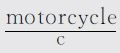 , a helmet should
 .
.
答案为B错。我认为B没有错。根据薄冰先生主编的《高级英语语法》第480页的讲解,上述试题中的riding可用垂悬的现在分词来解释。该语法书所举的例句为:
(2)When going into the hole, the bays are emptied from the outside first.
钻头入洞时,先要从外面将机架掏空。
请指教。
语法有规定语法(prescriptive grammar)和描写语法(descriptive grammar)之别。前者比较严格或者保守,后者比较宽松或者开明。一般语法家和英语教师多属前者,一般语言学者和作家多属后者。二者在不少问题上都有不同的看法,垂悬分词即是其中之一。就以上述试题为例,命题人即认为B错,描写语法则不认为是错。我们倾向于描写语法;只要不会引起误会或笑语,我们认为垂悬分词是可用的(如有兴趣,可参阅Webster's Dictionary of English Usage )。